EBC Webstore
Eastern Book Company

|
|||
|
|||

 Home > LAW BOOKS > Constitutional Law > Constitution of India Home > LAW BOOKS > Constitutional Law > Constitution of India |





 3
3
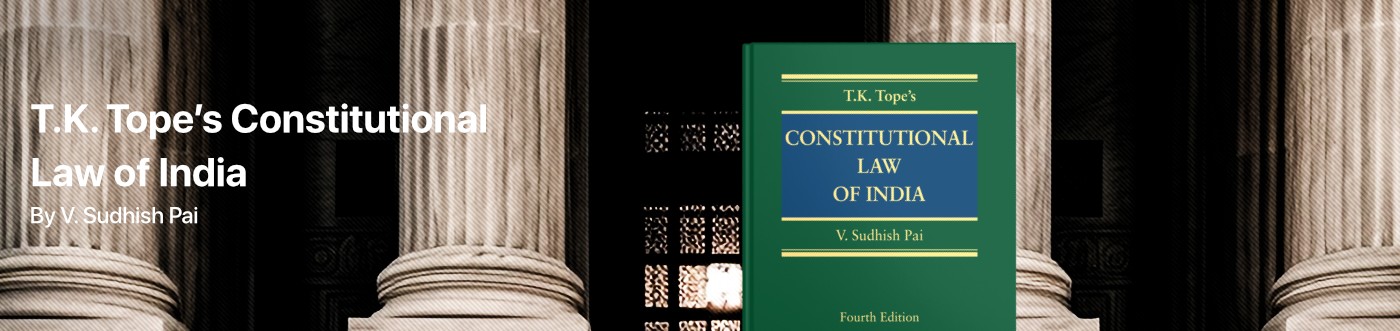
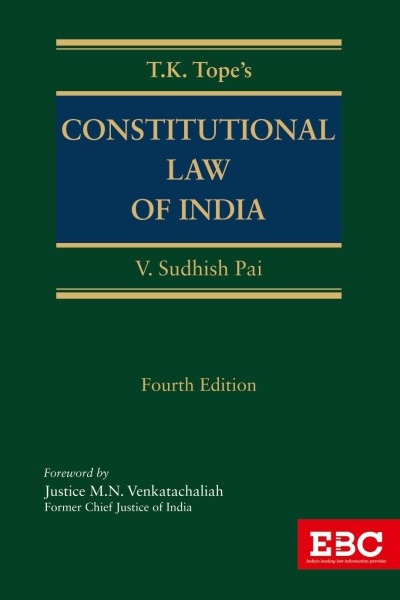
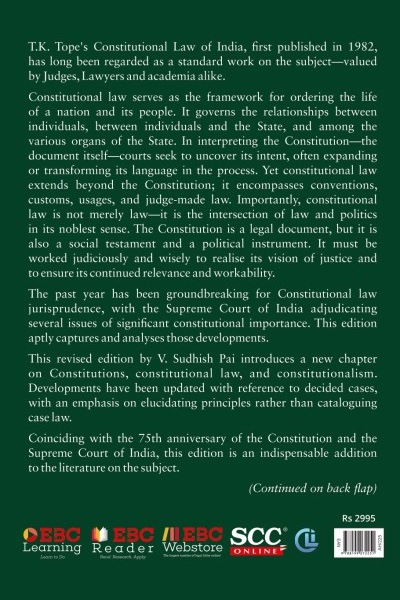
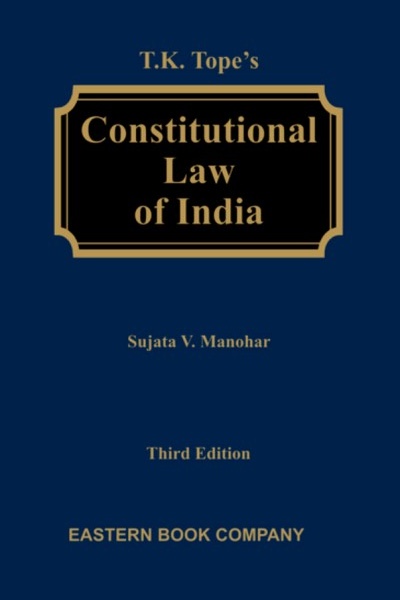
T.K. Tope's Constitutional Law of India offers a comprehensive and analytical exposition of India's constitutional framework, tracing its evolution, principles, and judicial interpretation. It shows how the Constitution controls the powers of the government, protects people's rights, and keeps a balance between different organs like the Legislature, Executive, and Judiciary. The new edition updates significant recent Supreme Court rulings, contemporary debates, and thematic developments, providing a balanced blend of classical scholarship and modern analysis. Instead of just listing many cases, the author focuses on explaining the main principles in a clear and meaningful way.
This revised edition by V. Sudhish Pai introduces a new chapter on Constitutions, constitutional law, and constitutionalism. Developments have been updated with reference to decided cases, with an emphasis on elucidating principles rather than cataloguing case law.
Coinciding with the 75th anniversary of the Constitution and the Supreme Court of India, this updated edition becomes even more special and stands as an indispensable, timely, and reliable resource.
Key Features:
This book is designed for lawyers, judges, academicians, and anyone interested in understanding India's constitutional journey.
Extract from the Foreword
Shri Pai is among distinguished contemporary scholars, thinkers, and commentators on constitutional law. The revising author also rightly says that the evolution and shaping of constitutional law is facilitated by those who argue constitutional cases, those who decide constitutional issues, and also those who critically assess and comment on them. The development of constitutional law and constitutionalism is thus a combined endeavour and contribution. Sudhish Pai's work in that regard is commendable. This work on constitutional law and constitutionalism is a welcome addition. Both the revising author and the publisher deserve our gratitude.
- Justice M.N. Venkatachaliah
Former Chief Justice of India
Table of Cases
Introduction
1. The Preamble
2. The Territory of India
3. Citizenship
4. Fundamental Rights
5. Right to Equality
6. Six Freedoms
7. Right to Freedom of Person
8. Right to Freedom of Religion
9. Cultural and Educational Rights and Rights of Minorities
10. Right to Property
11. Limitations on Fundamental Rights
12. Right to Constitutional Remedies
13. Directive Principles of State Policy
14. Fundamental Duties and Justiciability
15. Public Interest Litigation
16. The Union Executive
17. Parliament
18. Judiciary
19. Amendment of The Constitution
20. The Supreme Court and the Constitution
21. Courts and the Interpretation of the Constitution
22. The Comptroller and Auditor General of India
23. States–Executive
24. States–Legislature
25. The High Courts in the States
26. Union Territories, Scheduled and Tribal Areas, Panchayats and Municipalities
Cooperative Federalism
27. Indian Federation and State Autonomy - Cooperative Federalism
28. Borrowings and Succession to Property, Assets, Rights and Obligations 963
29. Trade, Commerce and Intercourse within the Territory of India
30. Emergency Provisions
31. Services under the Union and the States
32. Administrative Tribunals
33. Elections
34. Special Provisions Relating to Certain Classes
35. Official Language
36. Miscellaneous Provisions
37. Temporary, Transitional and Special Provisions
Appendices
I. Schedules
II. Constitution (Application to Jammu and Kashmir) Order, 2019
III. Declaration under Article 370(3) of the Constitution
Subject Index



|
Click on TITLE to choose available options.
|
|
Click on TITLE to choose available options.
|
![The Practical Lawyer - PLW [Annual Subscription]](https://s3.amazonaws.com/ebcwebstore/images/the-practical-lawyer-magazine-annual-subscription.png)
|
Click on TITLE to choose available options.
|

|
Click on TITLE to choose available options.
|

|
Click on TITLE to choose available options.
|

|
Click on TITLE to choose available options.
|

|
|

|
Click on TITLE to choose available options.
|

|
Click on TITLE to choose available options.
|
|
|
|
||
|
||
|